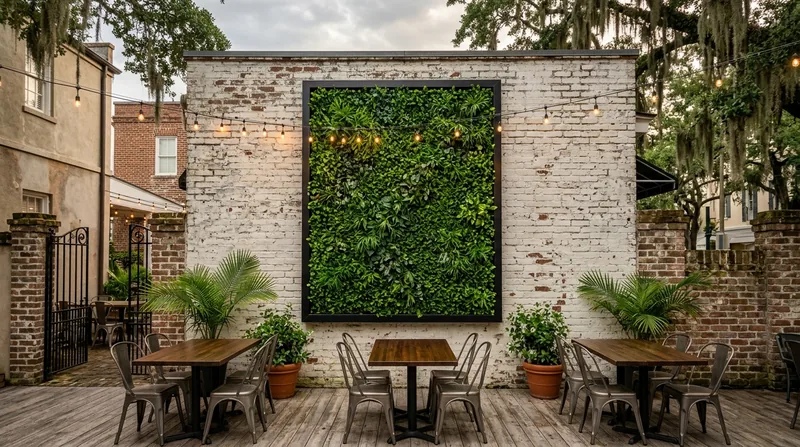




Artificial grass walls and vertical greenery transform blank exterior walls, interior courtyards, and garden boundaries throughout Charleston into living focal points without the maintenance demands of climbing vines or the die-back that comes with real ivy in our hot, humid Lowcountry climate. Whether you own a historic single house with weathered brick in the French Quarter, a modern home on Daniel Island, or a commercial property in Mount Pleasant, synthetic turf walls deliver year-round color and texture while standing up to salt air, intense summer heat, and the occasional tropical storm that leaves everything else battered. We install turf walls on existing structures, build them as standalone screens, and retrofit them into patios and balconies where traditional landscaping falls short. The result is an outdoor space that looks planted and finished without the watering, pruning, pest control, or seasonal decline.
Why Artificial Grass Walls Matter in Charleston's Tight Urban and Suburban Lots
Charleston's neighborhoods are defined by close quarters. Historic homes South of Broad sit on narrow lots behind wrought iron and brick walls that block sun and views. Newer subdivisions in Summerville and Goose Creek pack houses tightly with small side yards and minimal privacy between properties. Real climbing plants like clematis, Carolina jasmine, and trumpet vine grow aggressively in our humidity but often fail in deep shade cast by live oaks and neighboring structures, leaving bare walls for months. A synthetic turf wall solves this in one installation: it gives you instant greenery, creates privacy screens, defines spaces, and requires no fertilizer, pruning, or replacement when shade kills it off.
- We install turf walls on brick, stucco, vinyl siding, and concrete block without damaging the substrate or requiring extensive prep.
- Walls absorb sound and soften the visual impact of hard surfaces, which matters on properties near busy roads or commercial zones.
- Synthetic turf walls hold their color in full sun and deep shade alike, performing where real plants struggle in salt air and sandy soil.
- Vertical greenery increases usable outdoor space by making blank walls into design features instead of eyesores.
- Pet urine and salt spray do not degrade turf walls the way they damage living vines and ivy, and cleaning is straightforward.
A well-designed turf wall becomes a selling point for residential and commercial properties, and it costs a fraction of what you would spend on living plant maintenance over five years.
Key info: Charleston's salt air and humidity corrode metal trellises and rot wood frames fast. We use stainless steel or powder-coated aluminum backing systems that resist corrosion, and we size drainage behind the turf to shed water from afternoon thunderstorms without pooling or mold.
For more on how we handle vertical installations and outdoor living spaces, see our patio, balcony and turf-paver strips service.
How We Install Artificial Grass Walls: Process and Local Examples
A turf wall installation starts with a site visit to assess the existing surface, measure the area, check for structural integrity, and identify drainage and framing needs. We remove any loose paint, debris, or vegetation, then install a backing frame (typically aluminum or stainless steel) that holds the turf securely and allows water to flow behind it. We then roll out the synthetic turf, seam it tightly, secure it with stainless fasteners, and trim edges clean. The entire process takes one to three days depending on wall size and complexity.
- We inspect the wall substrate for cracks, water damage, and structural soundness before any turf goes on.
- We install a moisture barrier and drainage layer behind the turf to prevent water pooling and mold growth in Charleston's humid climate.
- We choose turf products rated for UV stability and fade resistance, essential in our intense summer sun and salt environment.
- We seam and finish the edges so the wall looks polished and the turf does not curl, fray, or lift at corners.
- We anchor the turf securely so wind, rain, and vibration from nearby traffic do not shift it or expose seams.
Once installed, the wall requires only occasional rinsing and spot cleaning, making it a low-maintenance alternative to residential artificial grass installation on the ground.
Local example: A James Island homeowner with a 12-foot brick garden wall facing west had no privacy from the neighbor and no way to grow living vines in the afternoon heat and salt spray. We installed a 6-foot tall turf wall along the property line, adding instant screening and a lush backdrop for outdoor entertaining. The wall drains properly, resists the salt air, and requires only a rinse-down after storms.
Artificial Grass Wall Installation Methods: Comparison Table
| Approach | Description | Best for |
|---|---|---|
| Framed wall | Aluminum or stainless frame bolted to existing wall, turf stretched and fastened to frame with drainage cavity behind. | Brick, stucco, concrete block, or vinyl siding where water drainage and air circulation are critical. |
| Direct adhesive installation | Turf glued directly to a clean, primed wall surface using polyurethane or waterproof adhesive. | Interior walls, protected courtyards, or surfaces where framing cannot be anchored or aesthetics demand a seamless look. |
| Modular turf panels | Pre-assembled turf panels with integrated backing, interlocked or bolted together on-site for fast assembly. | Large commercial walls, temporary installations, or properties where future removal or reconfiguration is anticipated. |
| Standalone turf screen | Freestanding structure (metal frame, posts, and turf) installed without attachment to existing walls or buildings. | Privacy screens between properties, garden dividers, or areas where wall-mounted installation is not possible. |
Each method is chosen based on wall condition, drainage requirements, aesthetic goals, and how long you plan to keep the installation in place. We assess your specific wall during the estimate and recommend the approach that offers the best durability and appearance for Charleston's climate.
Artificial Grass Walls and Vertical Greenery Cost in Charleston: What to Expect
Artificial grass wall pricing in Charleston starts at $18 per square foot for straightforward installations on clean, accessible walls. A typical 8-foot by 12-foot wall (96 square feet) runs roughly $1,700 to $2,200 before framing or drainage upgrades. Larger or more complex jobs, walls with multiple levels, corners, existing damage requiring repair, or difficult access, cost more. Framing systems, moisture barriers, and specialized backing add $3 to $8 per square foot depending on materials and site conditions.
Factors that increase cost include wall height and complexity, substrate repair (filling cracks, priming, replacing rotted sections), stainless steel or premium aluminum framing in salt-air zones, and extra drainage layers in areas prone to water pooling. A property on James Island or near the harbor may need corrosion-resistant materials that cost more than standard options. We always provide a written estimate after a site visit so you know exactly what you are paying for.
For a detailed breakdown of pricing across all our services, including examples for common wall sizes, visit our pricing page. We recommend getting 2 to 3 estimates so you can compare materials, workmanship warranty, and long-term durability claims. The cheapest quote is rarely the best value, especially in Charleston's salt and humidity.
Artificial Grass Walls and Vertical Greenery Near Me: What Charleston Homeowners Should Know When Hiring
Finding a qualified turf installation company near Charleston requires more than a phone number and a website. You need to verify that the installer understands artificial grass wall systems, can handle Charleston's climate and salt air, and stands behind the work with a clear warranty. Ask any company you contact for proof of insurance (general liability and workers compensation), a written specification of the turf product including face weight and pile height, and references from recent wall installations in your area.
Check whether the company has been in business locally for at least a few years, has a physical address in Charleston or the Lowcountry, and can show you photos of finished walls at similar properties. If your wall is on a property governed by an HOA, ask whether the installer can help you prepare HOA submittals and understands what your architectural guidelines allow. Never assume approval, but a good installer knows the common restrictions and can guide you through the process.
We have been installing turf walls and vertical greenery in Charleston since 2013. We provide a written specification for every job, carry full insurance, and offer a one-to-three-year workmanship warranty on installation. Contact us for a free estimate and we will walk you through the process, answer your questions, and show you examples of similar work in your neighborhood.
Maintenance and Long-Term Care for Artificial Grass Walls
One of the biggest advantages of artificial turf walls is that they require far less upkeep than living vines or ivy. After installation, a simple rinse with a garden hose removes dust, pollen, and debris. In Charleston, we recommend rinsing walls after storms to clear salt spray and prevent buildup. If pet urine or algae growth occurs, we offer turf cleaning and pet odor treatment to restore the wall's appearance and freshen it.
Inspect seams and edges annually to ensure the turf is still secure and water is draining properly. Stainless fasteners resist rust, but check them after extreme weather. If a section of turf lifts or a seam opens, we can repair it quickly without replacing the entire wall. Most walls last 10 to 15 years or more with minimal maintenance, far outlasting living plants in our climate and salt environment.
Artificial Grass Walls & Vertical Greenery in Charleston: Pricing Guide
| Service | Price | Details |
|---|---|---|
| Artificial grass wall, framed installation | Starting at $18/sq ft | Aluminum or stainless frame, turf, seaming, and labor on accessible walls; substrate must be clean and structurally sound |
| Wall substrate repair and prep | $5 to $12/sq ft | Filling cracks, priming, removing loose paint, or replacing rotted sections before turf installation begins |
| Moisture barrier and drainage layer | $3 to $8/sq ft | Added to framed installations in high-humidity zones or where water pooling is a concern; essential in salt-air environments |
| Standalone turf screen or freestanding wall | On estimate | Pricing depends on height, length, post system, and foundation requirements; requires site inspection to determine structural needs |
| Travel and estimate | Free | No charge for site visit or written estimate; response within 24 hours at (843) 994-2258 in Charleston and surrounding areas |
Indicative pricing, the exact cost depends on square footage, finish, and site access. Free personalized estimate within 24h at (843) 994-2258.


