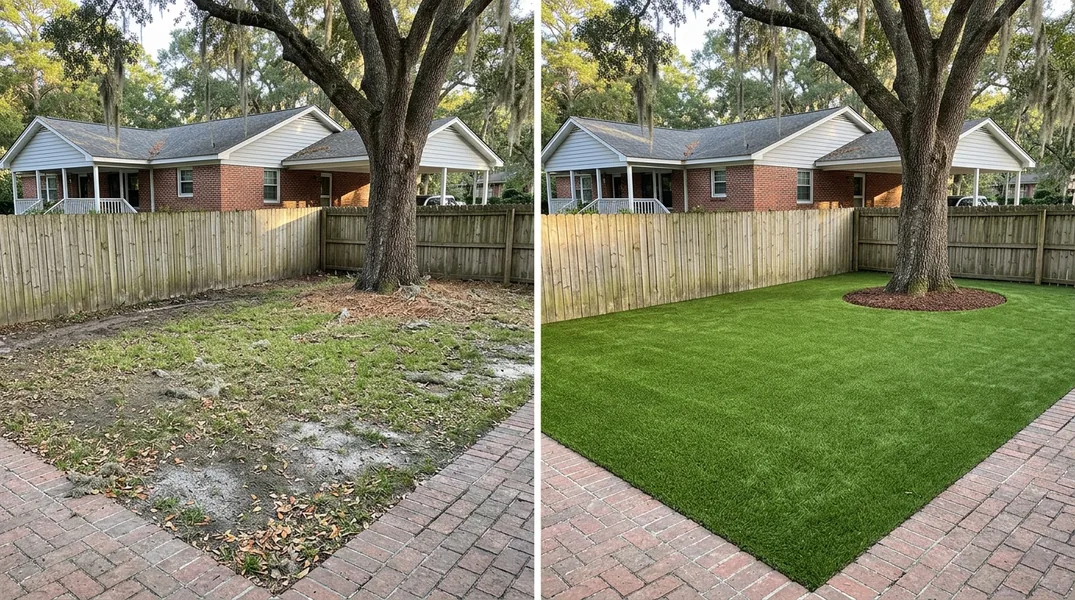
Why Charleston Homeowners Are Installing Backyard Putting Greens
If you're a golf enthusiast living in Charleston, you've probably imagined having your own practice space at home. A backyard putting green transforms your outdoor space into a personal golf retreat, letting you sharpen your short game without leaving your property. Whether you're serious about lowering your handicap or simply want to enjoy the sport you love, a Putting Green Installation offers convenience, year-round playability, and genuine entertainment value for family and friends.
The appeal goes beyond the golf itself. A well-designed backyard putting green adds visual interest and property value to your home. It's a focal point that encourages outdoor activity, gives you a productive use for underutilized yard space, and provides a talking point that impresses guests. In the Charleston area, where outdoor living is central to the lifestyle, a putting green fits naturally into the landscape and complements other hardscape and turf features.
Understanding Putting Green Turf and True Roll
Not all artificial grass is created equal, and this is especially true when it comes to putting green turf. The grass used in Putting Green Installation projects is engineered specifically for golf performance. Putting green turf has a much shorter pile height than standard Residential Artificial Grass Installation materials, typically ranging from 0.375 inches to 0.5 inches. This short, dense construction allows the ball to roll predictably and consistently, mimicking the experience of a real golf course green.
True roll refers to how accurately and smoothly a golf ball travels across the green's surface. Achieving true roll requires several factors working together: the turf itself must have a uniform pile height and density, the base foundation must be perfectly level and compacted, and the infill material must be distributed evenly. Professional installers understand that even slight variations in base preparation or infill can cause the ball to break unexpectedly or roll inconsistently. The goal is to create a surface where the ball's path is predictable and responsive to the golfer's stroke, not influenced by hidden dips, bumps, or uneven infill settling.
Designing Your Backyard Putting Green: Layout and Features
Designing a putting green that works for your space and skill level is the first step in the installation process. The size of your green depends on your available yard space and budget. Small greens can be as compact as 200 to 400 square feet, offering a simple practice area for chipping and short putts. Larger greens range from 600 to 1,500 square feet or more, allowing room for multiple hole placements, varied break patterns, and longer approach shots. Most homeowners in the Charleston area find that a mid-sized green of 400 to 800 square feet strikes the right balance between playability and practicality.
Beyond size, consider the shape and contours of your green. Professional designers often incorporate subtle elevation changes and slopes to create realistic break patterns that challenge your putting stroke. Gentle mounds, slight depressions, and varied grade changes make practice more engaging and help you develop the touch needed for real course play. You can also add features like a practice chipping area, bunker simulation (using sand or specialized materials), or multiple hole locations marked with removable cups. Drainage is another critical design element, especially in the humid Charleston climate. A properly sloped green with a quality base ensures water doesn't pool and that your green remains playable year-round.
Backyard Putting Green Cost in Charleston: What to Budget
The pricing for a backyard putting green varies significantly based on size, complexity, and materials. A basic, small putting green (200 to 400 square feet) typically costs between 3,000 and 6,000 dollars, while a mid-sized green (600 to 800 square feet) generally ranges from 6,000 to 12,000 dollars. Larger, more elaborate installations with significant contouring, premium turf, and additional features can easily exceed 15,000 to 20,000 dollars or more. These estimates include the putting green turf itself, base preparation, proper drainage, and professional installation labor.
Several factors influence your final cost. The condition of your existing yard affects base preparation expenses. If your yard requires significant grading, soil removal, or drainage work, costs will be higher. The quality and brand of putting green turf also matters. Premium turf products engineered for superior ball roll and durability cost more than basic options, but they deliver better performance and longevity. Custom features like bunkers, elevated sections, or decorative edging add to the total investment. For an accurate estimate tailored to your specific project, we recommend contacting Charleston Artificial Grass Installation at (843) 994-2258 or requesting a free estimate so our team can evaluate your space and provide detailed pricing based on your vision.
Installation Process: From Site Prep to First Putt
Professional Putting Green Installation begins with thorough site preparation. The existing grass and topsoil are removed, and the ground is graded to achieve the desired contours and slopes. The base layer is then compacted using specialized equipment to ensure a firm, stable foundation. This step is absolutely critical to achieving true roll. A poorly compacted base will shift and settle over time, creating inconsistencies in ball roll and ultimately ruining the playability of your green.
Once the base is prepared and approved, a layer of perforated landscape fabric is installed to prevent weeds and improve drainage. The putting green turf is then carefully laid out and seamed, with each section secured and trimmed to fit your design. The infill material (typically a blend of sand and rubber granules, or silica sand alone) is then spread evenly across the entire surface and brushed in to support the turf fibers and create the proper playing surface. Finally, the green is tested for drainage, levelness, and ball roll characteristics. Professional installers use specialized tools and techniques to ensure your new green meets performance standards before you take your first putt.
Maintenance and Long-Term Performance of Your Green
One of the advantages of artificial putting green turf is that it requires significantly less maintenance than natural grass. However, proper care is still essential to maintain true roll and extend the life of your investment. Regular brushing with a stiff broom keeps the pile upright and prevents matting, which can affect ball roll. Raking the infill material back into place after heavy use helps maintain consistent surface density. Occasional deep cleaning with a leaf blower or specialized equipment removes debris, leaves, and organic matter that can accumulate and degrade performance.
In the humid Charleston climate, occasional moss or algae growth is possible, though quality putting green turf is designed to resist these issues. A gentle cleaning with mild soap and water, or a specialized turf cleaner, handles any buildup quickly. Most high-quality putting green systems are designed to last 10 to 15 years or more with proper maintenance. Inspecting your green annually for signs of wear, infill settling, or drainage issues helps you catch problems early. If you notice changes in ball roll or surface consistency, contact Charleston Artificial Grass Installation at (843) 994-2258 to discuss maintenance options or potential repairs. With minimal effort, your backyard putting green will provide years of enjoyment and practice opportunities.
Looking for a professional artificial grass installation company in Charleston? Charleston Artificial Grass Installation responds fast for all your artificial grass installation needs.
Get a Free Quote